
 Custom Machine Condition Monitoring Software Development
using off-the-shelf Hardware
We develop software & use NI hardware for custom condition monitoring applications.
Our customers have deployed over 100 monitoring systems running our custom applications.
A few of the companies we've worked with:

 |
 |
 |
 |
 |
|
Case Studies
Subsea Oil Rig Device Communications with NI cRIO
Subsea Oil Rig Device Communications with NI cRIO
Off-the-shelf controller connects riser and blowout preventer components to topside operations
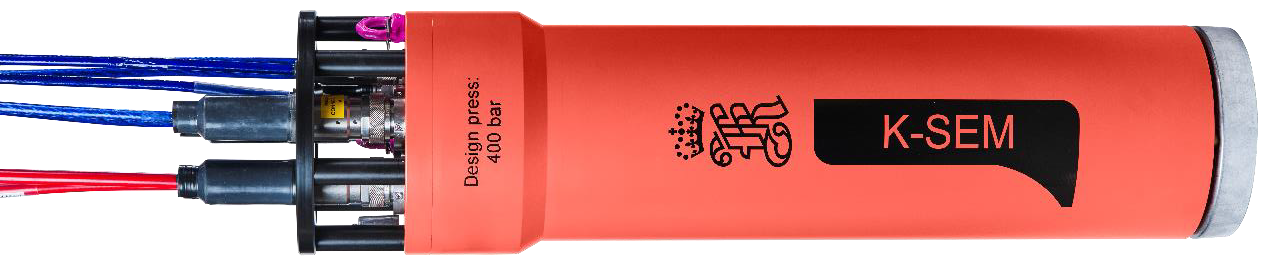
Client – Kongsberg Maritime – a global leader of systems for subsea oil and gas extraction
Challenge
Kongsberg decided to offer, as part of their overall Riser Management System (RMS), a system that contained a real-time communications hub for monitoring parts of a subsea drilling rig, including the Blowout Preventor (BOP), components of the Lower Marine Riser Package (LMRP), and 3rd-party devices.
The purpose of this hub was to aggregate data from subsea devices and send to topside control and monitoring systems. It would sit alongside other devices needed for subsea operations, such as power supplies, an Ethernet router, and a DSL comm driver.
Foremost, the hub needed to be robust and reliable: subsea maintenance is expensive. Expandability of the hub was also important to accommodate a variety of the types of inputs and communications protocols as features sets were adjusted according to customer and market needs.
This hub was intended to expand connectivity to the RMS beyond traditional riser monitoring, enabling full interoperability with intelligent subsea systems and instrumentation.
Solution
Since Kongsberg defined the overall system concept, architecture, and requirements as part of the broader Riser Management System (RMS) strategy, Kongsberg had intimate understanding of the needs of this data hub. Kongsberg reviewed options for the controller and the planned set of features and chose to use an NI Compact RIO (cRIO) controller.
The cRIO is combined with other components and that bundle is called K-SEM for Subsea Electronic Module. The other components in K-SEM include custom power supplies, DSL communications, additional Serial interfaces, analog inputs, an Ethernet Router, and so on. This case study focuses on the communications and data collection usage provided by the cRIO.
The K-SEM system supports more communications protocols such as Modbus, CAN, OPC UA, and custom protocols which can be developed using the cRIO’s FPGA. Furthermore, K-SEM can support analog inputs from strain gauges, LVDTs, pressure and temperature transmitters, and any other general-purpose analog input. Other devices such as cameras are also supported. All data was collected by the cRIO and output topside via OPC-UA.
The exact configuration changes according to the modules installed in the cRIO chassis, the software developed for those modules, and the desired communication protocols to support.
Working Together
Early on, Kongsberg had identified the Compact RIO (cRIO) controller as a platform for the monitoring system. Kongsberg sought a software partner that had deep experience with LabVIEW RT and cRIO development. Viewpoint Systems was selected. Our role was to support the development efforts based on Kongsberg’s design to make K-SEM a reality. Kongsberg retains full ownership of the design, architecture, and software sources and we worked closely with the Kongsberg team to make sure they had a clear understanding of what we jointly developed.
Part of the reason Viewpoint was selected was based on our initial discussions with Kongsberg when we reviewed the planned feature set and joint development approach. Kongsberg had done a solid review of cRIO capabilities; Viewpoint’s experience with the cRIO added a layer of assurance that this platform would do the job.
We took a very deliberate development approach. Even though each iteration followed a defined path from requirements to verification to deployment, the iterations were incremental enough that the initial version of K-SEM grew in capability controllably and confidently.
Viewpoint worked closely with our engineering colleagues at Kongsberg to develop the approaches to achieve the features. Since we did not have access to the complete K-SEM system components, Viewpoint developed and delivered in the USA while the Kongsberg engineering team tested and gave feedback while in Norway.
This collaboration effort was performed in three parts:
- development,
- debugging, and
- acceptance testing.
Development
For development, Kongsberg and Viewpoint exchanged documents and discussed the requirements for the next phase of incremental development. Viewpoint then wrote the LabVIEW RT code to implement the features. The source code, build, and configuration files were hosted in Viewpoint’s Microsoft Azure Dev Ops account and shared with Kongsberg.
Debugging
For debugging, we connected remotely to a laptop in Norway via TeamViewer to debug the deployment on the cRIO. Kongsberg had a few Modbus devices connected to the cRIO so we could verify being able to read Modbus data. The OPC UA output from the cRIO was checked by using UaExpert as the OPC UA client and validating that the received OPC UA data was correct.
Acceptance Testing
For acceptance testing, an image was created, deployed on the cRIO, and then Kongsberg and Viewpoint engineers would join a Teams calls while using TeamViewer to run through a thorough and formal acceptance test. Once everything passed, the image was deployed to systems into the field. This acceptance testing step was of course very important since the cRIO was being deployed in a hard-to-reach location subsea.
A cell modem was used for the Ethernet connection to satisfy IT security needs.
Benefits
The K-SEM system was motivated by a market demand to reveal more information to the operator about the behavior of the LMRP and control of the BOP while the rig was in operation. Being able to connect to an Intervention Workover Control Systems (IWOCS) skids was also beneficial for a temporary control system used to commission, workover, troubleshoot, or decommission subsea wells.
The K-SEM acted as a data hub to connect all these subsea devices and sensors with the topside facility.
The flexibility of the cRIO platform, with its family of plug-in cSeries modules and controller capabilities, enabled the integration of subsea systems and sensors, especially with the diverse protocols and media employed by various third-party vendors.
Pushing all the data to topside requires reliable and high-speed data transmission, especially for analog sensors running at a high sampling rate. This requirement had been a persistent challenge for the industry until COTS devices such as the cRIO became available.
How we helped
With Kongsberg driving the design, system architecture, and requirements, Viewpoint’s role was to take these elements and apply our skills in LabVIEW RT and cRIO hardware to create a functional and reliable software application.
The tight collaboration Viewpoint had with Kongsberg resulted in direct and efficient discussions of points needing clarification during our development. Likewise, with our knowledge of the cRIO and LabVIEW RT, we gave feedback to Kongsberg about good ways to implement the requirements and prepare for testing the application.
These discussions were helpful for giving Kongsberg an understanding of the details. Kongsberg was responsible for testing the developed application; Viewpoint supported that effort.
Viewpoint’s high-level roles in the development of the K-SEM were as follows.
- LabVIEW RT expertise and consulting
- Extensive cRIO application development experience
- Collaboration with Kongsberg on design and development of cRIO software
- Remote engineering for system development and testing
The tight collaboration between both Viewpoint and Kongsberg teams created a great environment for this development effort. The fact that we were separated by an ocean was immaterial.
System Overview
K-SEM connects the cRIO to a variety of devices, collects the data, and sends it topside via OPC UA. The topside facility uses this information to control operations subsea on the LMRP, BOP, and other devices as needed.
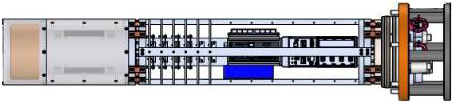
Devices typically interfaced are:
- Motion Reference Units (Kongsberg MRUs)
- Power supplies
- LVDT sensors
- Distributed Kongsberg devices with Modbus comms
- Third-party devices with a variety of comms, such as:
- Serial, Ethernet, Ethernet on DSL, and Modbus
- Cameras with subsea lights and lasers
Most of these units used Modbus to transfer messages and data. The K-SEM supports CAN, NMEA messages, and custom FPGA-based protocols as well.
Some sensors were used to acquire waveform for time-domain and FFT analysis. These waveforms create a significant amount of data to send topside via OPC UA but the bandwidth of standard Ethernet is capable of sending waveforms and all the other slower speed data points.
The capabilities of the K-SEM are an integral part of Kongsberg’s overall strategy of enhancing visibility of the Riser Management System (RMS) by including subsea digitalization and integration with third-party systems.
Overview of system components
| SOFTWARE FUNCTIONS |
|---|
| LabVIEW RT |
| OPC UA |
| DAQmx |
| HARDWARE USED |
|---|
| Compact RIO controller (e.g., cRIO 9022 or equivalent) |
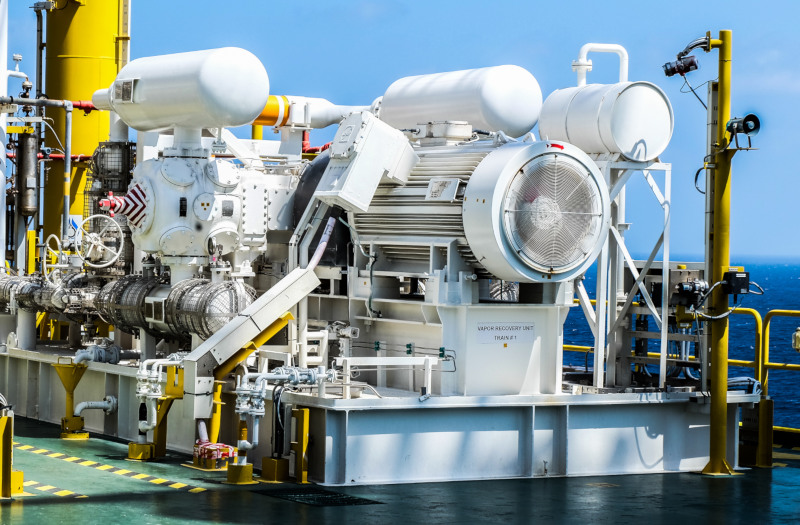
Multi-deployment Remote Online Condition Monitoring for Rotating Machinery – Case Study
Multi-deployment Remote Online Condition Monitoring for Rotating Machinery
Reciprocating Compressors & Balance of Plant Continuous Monitoring
Client – Industrial Manufacturer of Rotating Equipment
Challenge
When these machines go down, it is expensive for the client, both monetarily and for their reputation. The client wanted a way to monitor these assets to catch potential failures before they become catastrophic. Many times, the machine shuts down and it is not known if it shut down for an electrical transient on a signal or a truly problematic rise in vibration, pressure, or temperature. Taking the asset offline to investigate can take weeks, so often it is turned back on without knowing if the problem will get worse or if was a glitch. Long term, the client’s goal is to gather enough data to be able to predict machine failures before they happen so they can plan their outages.
Solution
The solution to this problem was a remote online monitoring system utilizing off-the-shelf hardware. It has plans for deployment in dozens more over the coming months and years. Data is usually accessed remotely by a centralized team of data analysts. (Occasional lack of connectivity requires data to be transferred via sneakernet).
Benefits
- Frequent assessment of assets to distinguish anomalies from failures requiring maintenance
- Data being collected to enable the potential for future predictive maintenance
- Remote monitoring anywhere in the world
- Flexible monitoring configuration capabilities to accommodate a variety of deployed custom asset configurations
System Overview
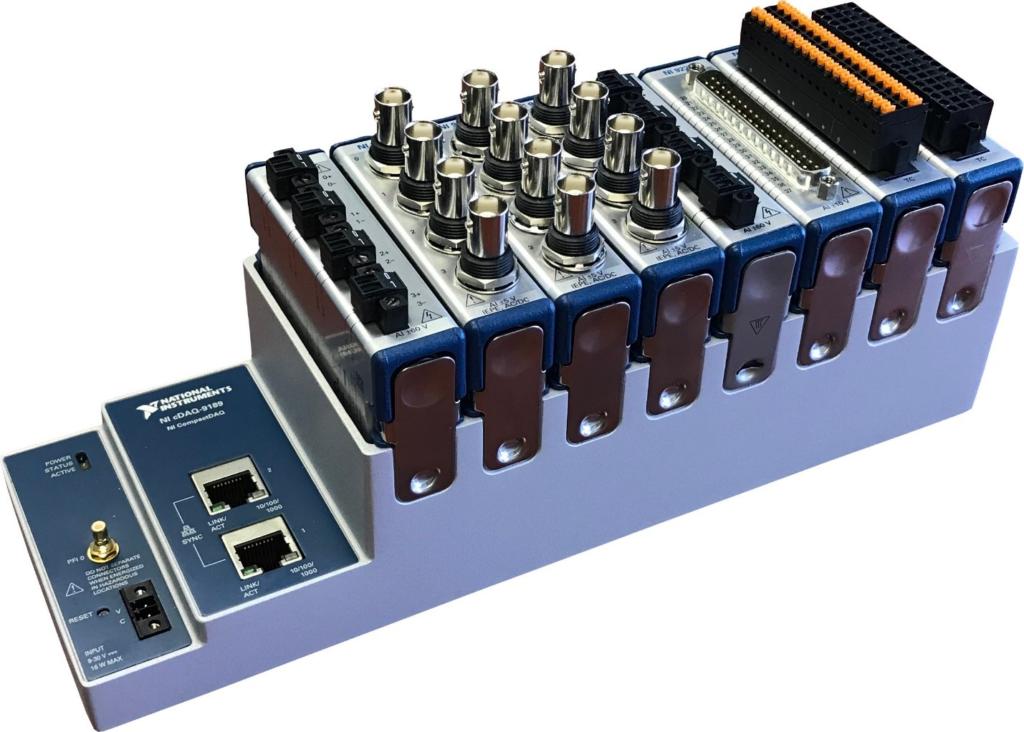
The online monitoring system was developed utilizing custom software and off-the-shelf hardware. The software was developed by Viewpoint, and the hardware was selected by both the client and Viewpoint together as a team. The hardware utilized is an NI cRIO combined with one or more NI cDAQs per asset (including balance of plant equipment). TSN (Time-Sensitive Networking) allowed synchronous channels across multiple cDAQs.
The online monitoring system captures data 24/7, and every sample is used in trigger analysis, so no events are missed. When a signal trips a configured trigger level, a file is captured using pre- and post-trigger data. Notification emails are sent upon completion of each of these capture files. There are several trigger types.
Channels can be configured as several different types (accelerometer, tachometer, encoder, proximeter, pressure, temperature, voltage, current), and any number of channels can be configured up to a theoretical limit of 300 channels of input data, and most C Series modules can be used to capture analog data.
Inputs monitored:
- Tachometer
- Encoder
- Vibration
- Proximeter
- Accelerometer
- Pressure
- Temperature
- Voltage
- Current
| SOFTWARE FUNCTIONS |
|---|
| Continuous signal monitoring |
| Data capture and email notification on configurable condition triggering |
| Configurable measurement channels |
| HARDWARE USED |
|---|
| NI cRIO |
| NI cDAQ |
| NI C Series Digital Module |
| NI C Series Voltage Input Module |
| NI C Series Sound and Vibration Input Module |
| NI C Series Temperature Input Module |
| INTERFACES / PROTOCOLS |
|---|
| TCP |
| USB |
| FTP |
| SSH |
Online Monitoring of Industrial Equipment using NI CompactRIO
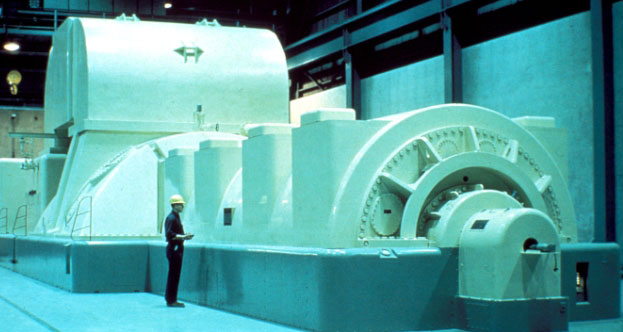
Online Monitoring of Industrial Equipment using NI CompactRIO
Improving Maintenance of expensive industrial equipment
Client – Large Industrial Equipment Manufacturer
Challenge
The maintenance of the equipment was not always done at the prescribed intervals because the cost of shutting down the plant is significant. This sometimes resulted in an equipment failure. This particular application is for equipment/machinery in the energy/power industry (a generator).
Solution
The online monitoring system monitors a particular parameter of interest to send warnings and alarms to the control room so that the operators know when maintenance needs to be performed on the particular part of interest. This system has been installed in multiple plants.
Benefits
- Enables condition-influenced maintenance intervals vs periodic intervals
- Reduces probability of catastrophic failure by providing warning indicator
System Overview
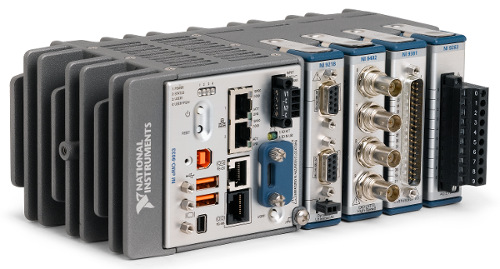
The system monitors the generator collector health. NI-based data acquisition hardware acquires the signal of interest, logs the raw data, processes the parameter of interest, and triggers/sends warnings and alarms to the control room. LabVIEW FPGA was used for analog and digital IO and a sensor check. LabVIEW Real Time was used for the calculation, data logging, serving data to the HMI and alarm/warning checking.
| SOFTWARE FUNCTIONS |
|---|
| Touchscreen GUI for data/alarm display and system configuration |
| Data logging |
| Signal processing and alarming |
| HARDWARE USED (selected by customer) |
|---|
| NI cRIO |
| NI Touch Panel Computer |
| Multiple NI C Series Modules |
| INTERFACES / PROTOCOLS |
|---|
| TCP/IP |
*- images are representative, not actual
Industrial Equipment Remote Online Condition Monitoring
Industrial Equipment Remote Online Condition Monitoring
Using NI CompactRIO
Client
A manufacturer of large industrial mission-critical equipment in the electrical energy / power industry.
Challenge
Our client had three main goals in mind. They wanted to:
- Decrease unanticipated downtime and maintenance expenses
- Provide a more complete picture of machine operation and state
- Improve equipment usage tracking.
Solution
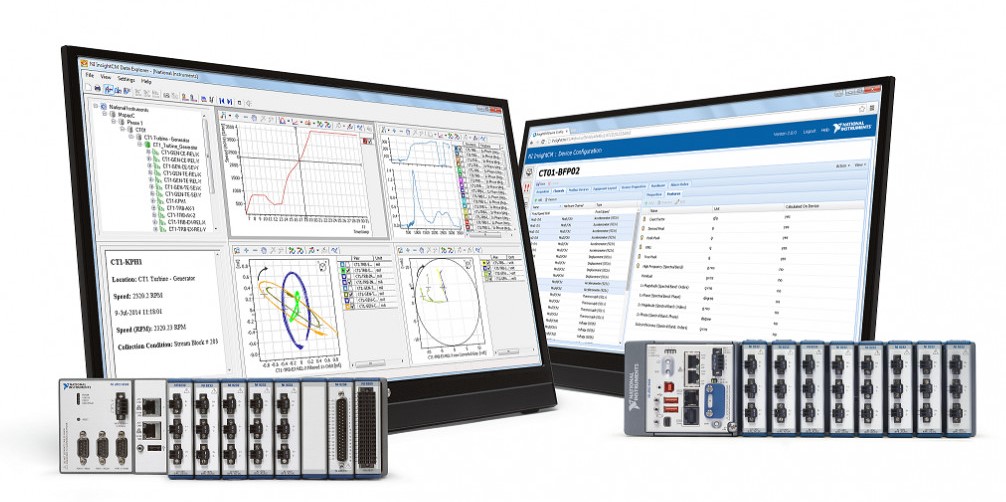
The solution is a multi-node (i.e. multi-site) remote monitoring system that utilizes an NI cRIO-based controller with customized NI InsightCM monitoring software.
Benefits
- Monitors vibration signals to predict expensive equipment failures
- Monitors current machine state via Modbus from other equipment in the system, including the primary system controller
- Provides alerts via email when any designated parameter is out of range
System Overview
The remote monitoring system monitors equipment condition by taking several vibration signal measurements along with reading over 500 Modbus registers. Local InsightCM vibration analysis on the cRIO extracts key features from the accelerometer data. Limit detection is run on these features and other equipment state and alarms are triggered when data is out of bounds. Information collected at multiple sites is sent to a central location either at periodic intervals or based on an alarm condition.
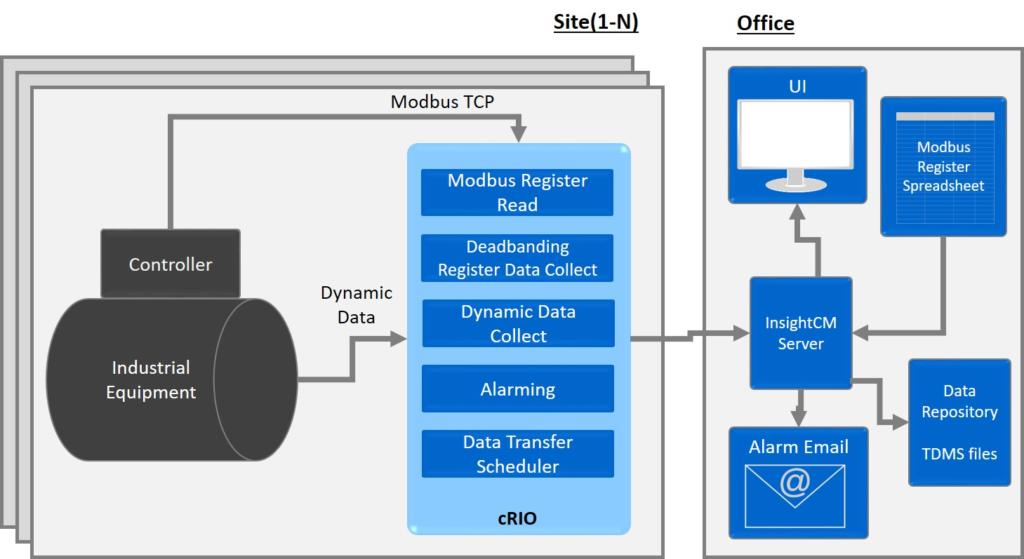
| SOFTWARE |
|---|
| NI InsightCM software |
| Modbus register configuration & reading |
| Dead banding-style register data collection to decrease amount of data captured and transferred |
| Dynamic signal data capture |
| Alarming detection |
| Data transfer scheduling |
| Semi-real-time alarm channel display |
| HARDWARE USED |
|---|
| NI cRIO |
| NI IEPE Analog Input Module |
| Microsoft Windows Server to host the NI InsightCM server software |
| INTERFACES / PROTOCOLS |
|---|
| Modbus TCP |
| Ethernet TCP/IP |
Condition Monitoring – Improving Route-Based Measurements
Condition Monitoring – Improving Route-Based Measurements
A more effective & efficient method
Client: Allied Reliability Group – A best-in-industry maintenance & reliability services company.
Challenge
Improve route effectiveness
Solution
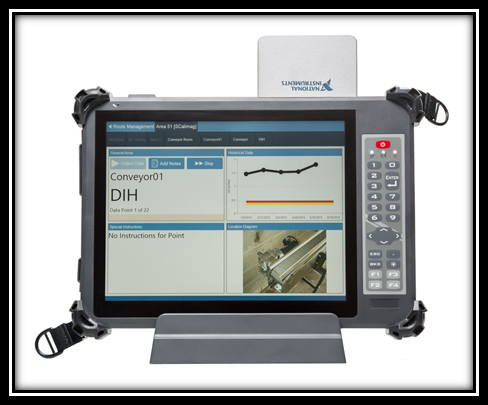
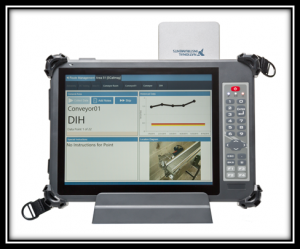
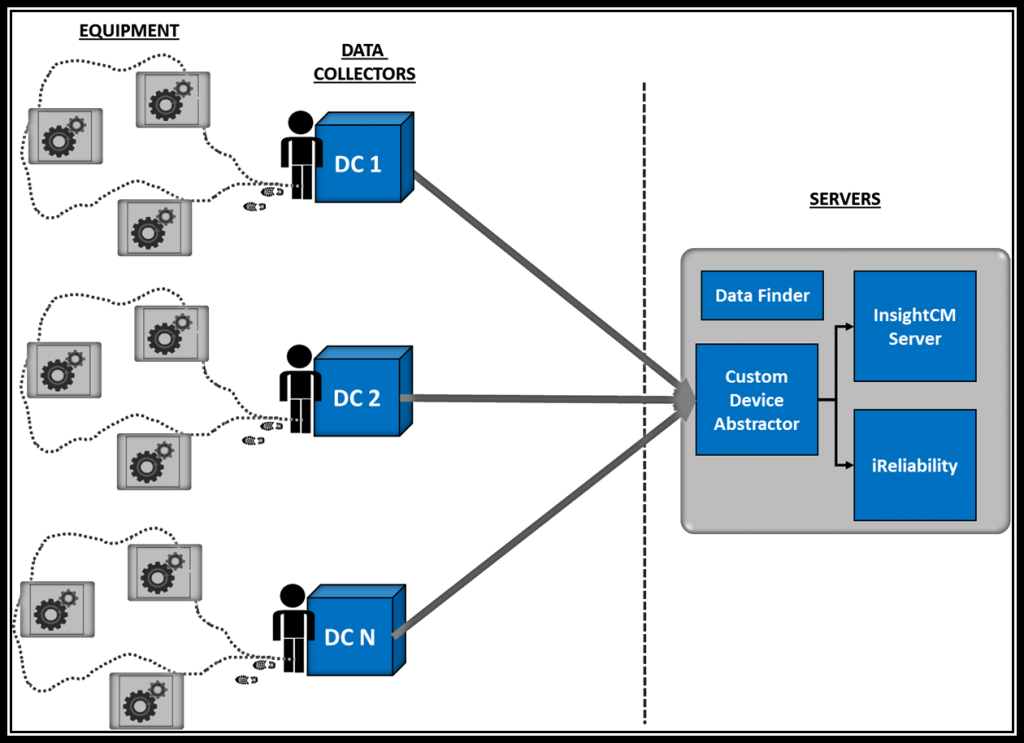
We developed data collector software that interfaces to the multi-technology compatible data collector hardware, Allied’s iReliability™ maintenance reliability software, and InsightCM, in order to provide a user interface that guides the route-based collection of data and stores that data on Allied’s cloud-based server for analysis. This custom solution is expected to be utilized on a daily basis in hundreds of facilities around the world, helping Allied provide its customers with a cost-efficient and scalable Condition Monitoring program.
Benefits
- Improve route efficiency by guiding the maintenance operator through the route-based collection process
- Provide better managed data via route status reporting that is accurate and delivered in a timely manner
- Reduce data collection errors by improving data collection automation as well as performing data quality checks during data collection
- Improve understanding of events/alarm conditions by providing additional data collection when particular criteria are met
- Integrate multiple Condition Monitoring technologies with a single piece of hardware and a consistent software platform
System Overview
Condition Monitoring – Improving the Uptime of Industrial Equipment
Condition Monitoring – Improving the Uptime of Industrial Equipment
Monitoring the Health of Industrial Equipment
Client: A large industrial company that uses industrial-grade compressors.
Challenge
- Increase awareness of potentially harmful operating conditions.
- Record detailed data upon event detection.
- Reduce unnecessary equipment shutdowns due to spurious vibration transients.
Solution
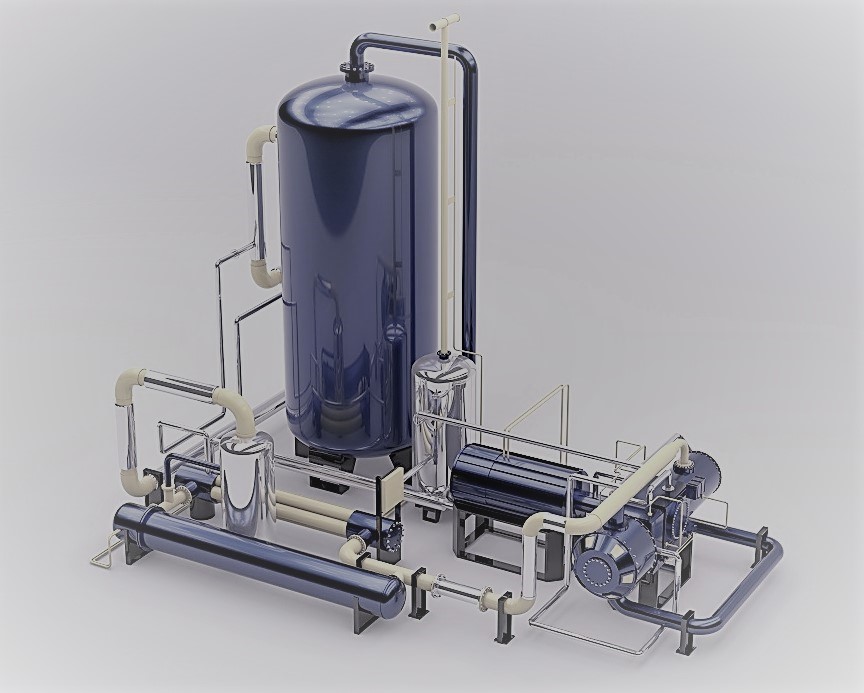
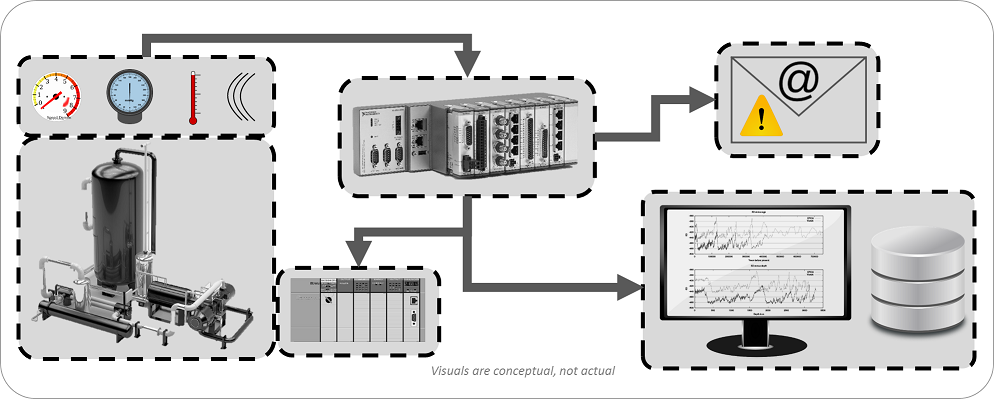
We utilized an off-the-shelf controller (NI cRIO) combined with custom software in order to augment and create the first system with ~2 man-months of effort. This solution has been installed in several facilities and is projected to be installed in hundreds of facilities around the world.
Benefits
- Send alerts via email when potentially harmful operating conditions occur.
- Record detailed data upon event detection for failure analysis and predictive maintenance.
- Suppress spurious vibration transient signals to reduce unnecessary equipment shutdowns.
System Overview
Condition Monitoring for Electric Power Generation
Condition Monitoring for Electric Power Generation
Monitoring generator and turbine components of power generation equipment
The CompactRIO-based system has allowed for continuous monitoring, rather than just a periodic review of turbine and generator performance. In addition, by combining the FPGA and the RT processor in a physically small device, the solution has been able to ensure very fast data acquisition, data reduction, and sophisticated analysis.
Client: A multi-national power generation equipment manufacturer
Background
Continuous monitoring of power generation equipment can have a great impact on maintaining a reliable flow of power to consumers as well as alerting the power generation equipment operator to potential equipment damage if timely repairs are not made.
This case study will focus on two measurement systems utilized by a multi-national power generation equipment manufacturer to monitor the generator and turbine components of their power generation equipment.
The manufacturer’s systems needed relatively high-speed waveform sampling, well-suited to the National Instruments CompactRIO platform. Viewpoint Systems provided technical assistance in the development of these systems.
Challenges
The difference in the types of analyses and data rates of the measurement systems required a flexible yet capable hardware platform. Each system needed to work on a generator outputting 50 Hz AC or 60 Hz AC.
Viewpoint’s Solution
The CompactRIO platform and LabVIEW proved to be an excellent solution for the electric power generation condition monitoring system’s data acquisition and analysis needs. The small size and robustness of CompactRIO allowed the system to be placed at a preferred location. In both the flux probe and the blade tip timing, the CompactRIO FPGA could acquire and pre-process the data. The CompactRIO successfully managed – and continues to manage – all analysis, data archiving, and communication with a host PC.
In the case of the tip timing, the data rates were high enough that the detection of the tip location for each signal needed to be performed in the FPGA so that the real-time (RT) layer received a much-reduced data rate of tip locations. The RT processor was able to perform higher level analyses on these timings. Occasionally, a snapshot of a raw tip timing waveform could be passed to the RT processor for archiving and presentation to an engineer. However, due to the data bandwidth and processor loading of the CompactRIO, such snapshots must be infrequent.
For both systems, a master PC managed the operator user interface, long-term data collating, reporting, and archiving of files and statistics. Each CompactRIO connected to this master PC via a TCP/IP connection.
Results
The CompactRIO-based system has allowed for continuous monitoring, rather than just a periodic review of turbine and generator performance. In addition, by combining the FPGA and the RT processor in a physically small device, the solution has been able to ensure very fast data acquisition, data reduction, and sophisticated analysis. By deploying CompactRIO devices, the multi-national power generation equipment manufacturer achieved a cost-effective method of monitoring the power generation facility equipment, ensuring detection of operational issues quickly and easily.
Technical Highlights
Both measurement systems described required sampling rates greater than 10 kHz, restricting the use of traditional PLC-based data acquisition devices and requiring a programmable automation controller (PAC). Each system measured the performance by connecting to special sensors and associated signal conditioning, provided by our customer, such that the data acquisition equipment only needed to support ±10 V signals. Furthermore, each of these systems needed to push data to a master PC for data trending, result archiving, and operator display.
Despite the significant differences in the measurement types, Viewpoint Systems was able to utilize a common set of data acquisition, processing, and connectivity tools, based on the NI CompactRIO platform and LabVIEW, to monitor the system.
More information about each measurement system follows.
Flux Probe
The flux probe system looks for shorts in the windings of the generator. Each time a winding passes under the flux probe, the probe output increases. When a winding is shorted, the field created by the winding is reduced and detected as a lower amplitude output by the flux probe. The position of a shorted winding inside the generator can be located by measuring a key-phasor signal that pulses once per revolution and converting the timing offset of this weakened signal into an angular position. Both flux and key-phasor signals are measured at about 50 kS/s.
Figure 1 shows an example signal output by a flux probe. The local peaks are indicative of winding current. Automated analysis of the amplitudes of the flux signals can be challenging due to changing waveform shape as a function of generator load and severity of shorts.
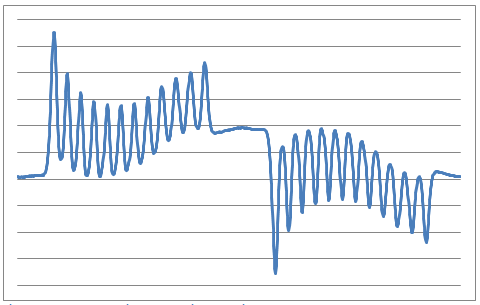
Figure 1 – Example flux signal over a single rotation
A good reference of the flux probe technique is described in the Iris Power Engineering article, “Continuous Automated Flux Monitoring for Turbine Generator Rotor Condition Assessment.”
Turbine Tip Timing
The turbine tip timing system looks for displacement of each turbine blade tip from nominal position. At slow rotational speeds, the spacing between each tip closely follows the uniform blade spacing. At higher speeds, vibrations and resonances can make the blade tips wobble slightly, causing small deviations in the timing of the tip passing by a sensor.
A special proximity sensor detects the tip of the turbine blade, and can be based on optical, eddy-current, microwave, and other techniques. Any positional deviations of a tip from nominal give indications about the mechanical forces on the blade as well as compliance of the blade to those forces as the blade ages. Specifically, each blade has natural resonances and compliance, both of which can change if the blade cracks.
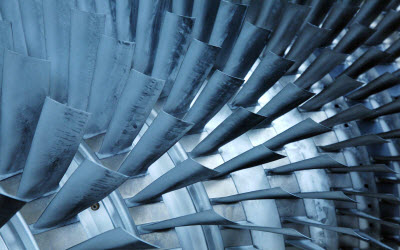
A turbine typically contains several stages and each stage contains many blades. See Figure 2 below for an example. The number of tip sensors per stage is variable; if blade twist is measured, at least two sensors are oriented perpendicular to the rotation direction. Also, the acquisition rate from each sensor is fast. For example, consider a stage with 60 blades, the width of each blade occupying about 1/10 the space between adjacent blades, and a generator running at 3600 RPM (60 Hz). The tip sensor would detect a pulse every 1/3600 s, lasting for less than about 1/36000 s, as the blades passed by. Accurate location of the pulse peak or zero-crossing then requires sample rates over 100 kS/s. Because multiple sensors are typically used, tip timing measurement systems can easily generate 10s of MBs of data per second.
Figure 2 – Example generator turbine blades
A good reference for the tip timing technique is described in the article by ITWL Air Force Institute of Technology – Poland, “Application of Blade-Tip Sensors to Blade-Vibration Monitoring in Gas Turbines.”
Industrial Embedded Monitoring – Remote Structural Health Monitoring using a cRIO
Industrial Embedded Monitoring – Remote Structural Health Monitoring
Using a cRIO to remotely assess structural health
By connecting these systems with a host PC, we can monitor continuous vibration activity and alarm conditions on a variety of structures despite inclement weather.
Challenge
Continuously monitoring the structural health of the Long Island Railroad (LIRR) Viaduct despite the relative inaccessibility of the structure.
Solution
Using CompactRIO, LabVIEW FPGA, and the LabVIEW Digital Filter Design Toolkit to measure the modal analysis of vibration data generated from ambient excitation, capture this data remotely, and analyze significant events.
Background
Engineers use structural vibrations to assess the conditions of many constructions and machines, including buildings, bridges, dams, towers, cranes, and mountings. Although we have had tools to monitor structural vibration for decades, these tools restrict data collection to short durations of high-fidelity waveforms or longer durations of summarized power in frequency band results. Many structures vibrate in meaningful ways only in the presence of ambient forces such as wind, vehicle activity, nearby construction, or random events such as earthquakes and tornados. Therefore, data collection needs to be active during these events.
Due to recent improvements in memory storage, processor speed, and wideband wireless communications technology, we can collect high-fidelity waveforms over long periods. We can also communicate to host PCs that aggregate structural vibration data across multiple collection locations, providing permanent data collection and superior analysis and reporting capabilities.
STRAAM Corporation, a leader in structural integrity assessment, and Viewpoint Systems, a Select National Instruments Alliance Partner, collaborated to develop a system that functions outdoors and in other less-accessible sites and maintains the capabilities of the available PC-based solution. Ultimately, we produced an enhanced version of STRAAM’s SKG CMS™ system to install on a Long Island railroad bridge.
System Requirements
The system needed to perform the following operations:
- Collect data from accelerometers and other environmental sensors
- Store weeks of data locally at full acquisition rates
- Analyze custom data in real time
- Publish summary statistics periodically to the host
- Upload waveforms to host on request
- Offer rugged, lightweight, cost-effective, reliable OEM deployment
- Contain flexible architecture to handle future capabilities
- Ensure secure user access control
System Design
We chose a system based on the NI CompactRIO platform and dynamic signal acquisition (DSA) C Series modules. The CompactRIO and associated C Series signal conditioning modules have an operating temperature range of -40 to 70 °C, well within typical environmental extremes for most installation locations. Additionally, the CompactRIO controller has no moving parts, increasing the mean time between failure and ensuring it can withstand physical mishandling during shipment and installation. For software, we decided to use the NI LabVIEW Real-Time Module and the LabVIEW FPGA Module. We used LabVIEW FPGA for basic signal acquisition as well as some custom antialiasing filtering to allow for sampling rates below the capabilities of the DSA module.
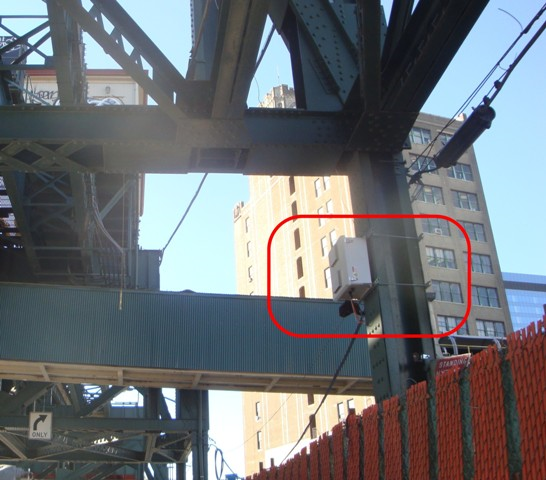
Figure 1 – Equipment mounted to LIRR Support Beam
Data Acquisition and Filtering
The DSA module acquired acceleration signals via special sensors, supplied by STRAAM, that output information about tilt and acceleration. Because large structures resonate at low frequencies, it is important that these sensors have extremely low noise, high dynamic range, and low frequency response to gather information about structures at less than 1 Hz. The low frequency range and long-term data storage need combine to create a maximum data collection rate frequency of 200 samples per second (S/s). The NI 9239 does not sample that slowly due to its delta-sigma converter technology, so we sampled at 2,000 S/s and used lowpass digital filtering on the field-programmable gate array (FPGA) to produce an antialiased signal at 200 S/s. Simple subsampling through decimation would violate the Nyquist criterion. Using the LabVIEW Digital Filter Design Toolkit, we produced a 28-tap infinite impulse response (IIR) filter with a 3 dB roll-off at 0.8 times the sample rate with a stopband attenuation greater than 90 dB. The Digital Filter Design Toolkit includes tools to automatically generate code to deploy the filter to the FPGA. We carefully selected fixed-point arithmetic to ensure proper operation without using excessive FPGA resources. The final filter was a 24-bit fixed-point solution with a 4-bit mantissa.
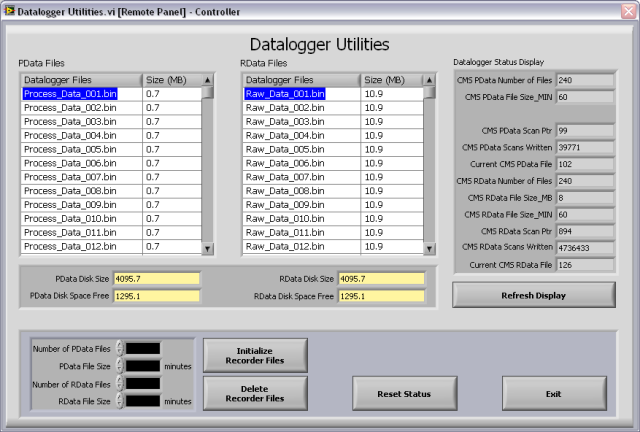
Figure 2: Remote Front Panel Displaying Acceleration Waveform Capture
Configuration, Signal Processing, and Alerts
STRAAM uses proprietary analysis routines, based on the structure’s resonant frequencies, to extract relevant information from the continuous stream of acceleration data. Because ambient energy excites the structures, we analyzed some initial data to locate these resonances. After this initial period, we configured the CompactRIO to perform the proprietary analyses based on the location of these resonances. We handled all activity in this initial setup remotely via wireless communications. We connect to CompactRIO over a wireless connection, then to a LabVIEW remote panel where we initially acquire and assign resonance bands.
The signal processing requires the spectral power and time-domain structure of the waveforms inside those resonant bands. The CompactRIO processor and FPGA module can calculate fast Fourier transform (FFT)-based power spectrums and perform time-domain filtering calculation so we can base calculations on the complicated algorithms provided by STRAAM. Furthermore, the large CompactRIO RAM can archive raw acceleration waveforms for later retrieval. The LabVIEW development environment greatly simplifies adjusting these calculations. We apply additional calculations to identify noteworthy events and alert the engineers when important conditions occur. These conditions may signify the presence of a meaningful ambient excitation or that considerable changes to the structure have occurred.
Host Communication
In order to successfully operate, this system needs to communicate effectively to the host PC. Because the system is deployed in almost-inaccessible and outdoor locations, all interactions with the system should occur remotely. Using cellular modems, the system connects via TCP/IP to upload important information, issue event alerts, and allow remote configuration. We designed the LabVIEW application to send periodic summary information via custom binary messages to the host with information about the condition of the structure and the CompactRIO system. The host then tallies this information along with all other SKG CMS™ systems deployed in the field. In addition to this summary information, the host can pull raw waveform data from the CompactRIO RAM. To avoid tampering and unauthorized access, we password protected all connections.
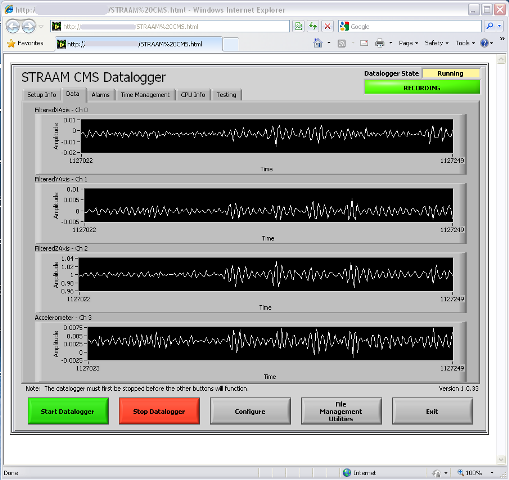
Figure 3 – Data File Configuration Screen
Summary
We have successfully installed several functional SKG CMS™ systems based on the CompactRIO platform. By connecting these systems with a host PC, we can monitor continuous vibration activity and alarm conditions on a variety of structures despite inclement weather. Our customers enjoy the benefits of modern Ethernet-driven, Web-based connectivity to verify the status of their structures and we enjoy the benefits of the rugged, reliable, low-cost, and reprogrammable CompactRIO system for data collection.
Want to learn how we'd tackle your custom condition monitoring challenges?
We’re here to answer your questions
I’m new to condition monitoring.
Does it make sense for my situation?
Maybe, maybe not. Let’s find out.
Some tidbits that we’ll uncover:
- Different from other technical projects, start by understanding the ROI before implementing CM
- Learn how to justify CM not just from direct costs, but indirect costs The best indicators aren’t always the easiest components to monitor
- Three considerations when selecting components to monitor
- Three categories of decisions that can be made
I think Online Condition Monitoring is Right for me.
How can I get started?
You can reach out to us directly, or start here for some of your first steps.
Some tidbits that we’ll uncover:
- Building a business case may require BOTH qualitative and quantitative justification
- REDI (Reliable Early Detection Indicators) to help component monitoring selection
- Initiating a pilot program
Okay, you’ve got my attention.
So what the heck is NI's InsightCM?
It’s not right for every situation, but we can help you decide if it makes sense or not. You can learn more about InsightCM here: http://www.ni.com/insightcm/
Some reasons that we like InsightCM:
- It provides a huge base of out-of-the-box functionality for traditional rotating machine monitoring applications
- It natively supports multiple data sources, such as accelerometers, thermocouples and Modbus, plus common analysis capabilities
- Allows for extensive customization features and use of open standard data files
Think InsightCM can help with your needs? Reach out to get our opinion »
Viewpoint Systems Industry Expertise

Manufacturing
Energy

Transportation
We've helped teams at some of the world's most innovative companies