
Subsea Oil Rig Device Communications with NI cRIO
Off-the-shelf controller connects riser and blowout preventer components to topside operations
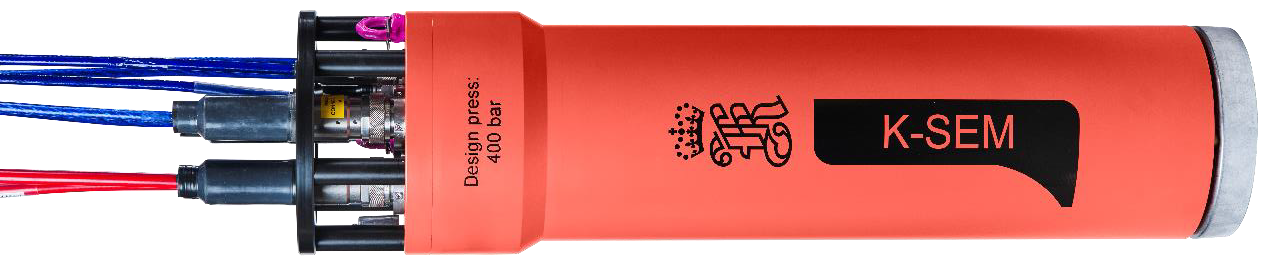
Client – Kongsberg Maritime – a global leader of systems for subsea oil and gas extraction
Challenge
Kongsberg decided to offer, as part of their overall Riser Management System (RMS), a system that contained a real-time communications hub for monitoring parts of a subsea drilling rig, including the Blowout Preventor (BOP), components of the Lower Marine Riser Package (LMRP), and 3rd-party devices.
The purpose of this hub was to aggregate data from subsea devices and send to topside control and monitoring systems. It would sit alongside other devices needed for subsea operations, such as power supplies, an Ethernet router, and a DSL comm driver.
Foremost, the hub needed to be robust and reliable: subsea maintenance is expensive. Expandability of the hub was also important to accommodate a variety of the types of inputs and communications protocols as features sets were adjusted according to customer and market needs.
This hub was intended to expand connectivity to the RMS beyond traditional riser monitoring, enabling full interoperability with intelligent subsea systems and instrumentation.
Solution
Since Kongsberg defined the overall system concept, architecture, and requirements as part of the broader Riser Management System (RMS) strategy, Kongsberg had intimate understanding of the needs of this data hub. Kongsberg reviewed options for the controller and the planned set of features and chose to use an NI Compact RIO (cRIO) controller.
The cRIO is combined with other components and that bundle is called K-SEM for Subsea Electronic Module. The other components in K-SEM include custom power supplies, DSL communications, additional Serial interfaces, analog inputs, an Ethernet Router, and so on. This case study focuses on the communications and data collection usage provided by the cRIO.
The K-SEM system supports more communications protocols such as Modbus, CAN, OPC UA, and custom protocols which can be developed using the cRIO’s FPGA. Furthermore, K-SEM can support analog inputs from strain gauges, LVDTs, pressure and temperature transmitters, and any other general-purpose analog input. Other devices such as cameras are also supported. All data was collected by the cRIO and output topside via OPC-UA.
The exact configuration changes according to the modules installed in the cRIO chassis, the software developed for those modules, and the desired communication protocols to support.
Working Together
Early on, Kongsberg had identified the Compact RIO (cRIO) controller as a platform for the monitoring system. Kongsberg sought a software partner that had deep experience with LabVIEW RT and cRIO development. Viewpoint Systems was selected. Our role was to support the development efforts based on Kongsberg’s design to make K-SEM a reality. Kongsberg retains full ownership of the design, architecture, and software sources and we worked closely with the Kongsberg team to make sure they had a clear understanding of what we jointly developed.
Part of the reason Viewpoint was selected was based on our initial discussions with Kongsberg when we reviewed the planned feature set and joint development approach. Kongsberg had done a solid review of cRIO capabilities; Viewpoint’s experience with the cRIO added a layer of assurance that this platform would do the job.
We took a very deliberate development approach. Even though each iteration followed a defined path from requirements to verification to deployment, the iterations were incremental enough that the initial version of K-SEM grew in capability controllably and confidently.
Viewpoint worked closely with our engineering colleagues at Kongsberg to develop the approaches to achieve the features. Since we did not have access to the complete K-SEM system components, Viewpoint developed and delivered in the USA while the Kongsberg engineering team tested and gave feedback while in Norway.
This collaboration effort was performed in three parts:
- development,
- debugging, and
- acceptance testing.
Development
For development, Kongsberg and Viewpoint exchanged documents and discussed the requirements for the next phase of incremental development. Viewpoint then wrote the LabVIEW RT code to implement the features. The source code, build, and configuration files were hosted in Viewpoint’s Microsoft Azure Dev Ops account and shared with Kongsberg.
Debugging
For debugging, we connected remotely to a laptop in Norway via TeamViewer to debug the deployment on the cRIO. Kongsberg had a few Modbus devices connected to the cRIO so we could verify being able to read Modbus data. The OPC UA output from the cRIO was checked by using UaExpert as the OPC UA client and validating that the received OPC UA data was correct.
Acceptance Testing
For acceptance testing, an image was created, deployed on the cRIO, and then Kongsberg and Viewpoint engineers would join a Teams calls while using TeamViewer to run through a thorough and formal acceptance test. Once everything passed, the image was deployed to systems into the field. This acceptance testing step was of course very important since the cRIO was being deployed in a hard-to-reach location subsea.
A cell modem was used for the Ethernet connection to satisfy IT security needs.
Benefits
The K-SEM system was motivated by a market demand to reveal more information to the operator about the behavior of the LMRP and control of the BOP while the rig was in operation. Being able to connect to an Intervention Workover Control Systems (IWOCS) skids was also beneficial for a temporary control system used to commission, workover, troubleshoot, or decommission subsea wells.
The K-SEM acted as a data hub to connect all these subsea devices and sensors with the topside facility.
The flexibility of the cRIO platform, with its family of plug-in cSeries modules and controller capabilities, enabled the integration of subsea systems and sensors, especially with the diverse protocols and media employed by various third-party vendors.
Pushing all the data to topside requires reliable and high-speed data transmission, especially for analog sensors running at a high sampling rate. This requirement had been a persistent challenge for the industry until COTS devices such as the cRIO became available.
How we helped
With Kongsberg driving the design, system architecture, and requirements, Viewpoint’s role was to take these elements and apply our skills in LabVIEW RT and cRIO hardware to create a functional and reliable software application.
The tight collaboration Viewpoint had with Kongsberg resulted in direct and efficient discussions of points needing clarification during our development. Likewise, with our knowledge of the cRIO and LabVIEW RT, we gave feedback to Kongsberg about good ways to implement the requirements and prepare for testing the application.
These discussions were helpful for giving Kongsberg an understanding of the details. Kongsberg was responsible for testing the developed application; Viewpoint supported that effort.
Viewpoint’s high-level roles in the development of the K-SEM were as follows.
- LabVIEW RT expertise and consulting
- Extensive cRIO application development experience
- Collaboration with Kongsberg on design and development of cRIO software
- Remote engineering for system development and testing
The tight collaboration between both Viewpoint and Kongsberg teams created a great environment for this development effort. The fact that we were separated by an ocean was immaterial.
System Overview
K-SEM connects the cRIO to a variety of devices, collects the data, and sends it topside via OPC UA. The topside facility uses this information to control operations subsea on the LMRP, BOP, and other devices as needed.
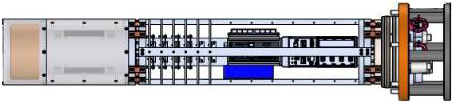
Devices typically interfaced are:
- Motion Reference Units (Kongsberg MRUs)
- Power supplies
- LVDT sensors
- Distributed Kongsberg devices with Modbus comms
- Third-party devices with a variety of comms, such as:
- Serial, Ethernet, Ethernet on DSL, and Modbus
- Cameras with subsea lights and lasers
Most of these units used Modbus to transfer messages and data. The K-SEM supports CAN, NMEA messages, and custom FPGA-based protocols as well.
Some sensors were used to acquire waveform for time-domain and FFT analysis. These waveforms create a significant amount of data to send topside via OPC UA but the bandwidth of standard Ethernet is capable of sending waveforms and all the other slower speed data points.
The capabilities of the K-SEM are an integral part of Kongsberg’s overall strategy of enhancing visibility of the Riser Management System (RMS) by including subsea digitalization and integration with third-party systems.
Overview of system components
| SOFTWARE FUNCTIONS |
|---|
| LabVIEW RT |
| OPC UA |
| DAQmx |
| HARDWARE USED |
|---|
| Compact RIO controller (e.g., cRIO 9022 or equivalent) |